




“It was the best of times, it was the worst of times.” The oft-quoted phrase could sum up the year 2025 for the country and for the President.
The period marked a series of decisive actions by President Ferdinand R. Marcos Jr. as he initiated and pursued accountability in public office by going after individuals linked to anomalous projects, underscoring a firm commitment to clean and transparent governance.
President Marcos is the first president to expose and pursue actions against corruption, as good governance and accountability became defining pillars of his administration.
The President also intensified efforts to deepen international partnerships, advance inclusive social reforms, strengthen food security, and improve public services.
During his fourth State of the Nation Address (SONA) on July 28, the President strongly condemned anomalous flood control projects, delivering the unforgettable line, “Mahiya naman kayo sa inyong kapwa Pilipino!,” and calling out systemic corruption and demanding accountability.
Personally inspecting flood control projects, President Marcos intensified the administration’s crackdown on corruption, ordered the recovery of public funds, and encouraged public participation through the launch of the “Sumbong sa Pangulo” website and the Department of Public Works and Highways (DPWH) Transparency Portal.
On September 11, President Marcos signed Executive Order No. 94, which created the Independent Commission for Infrastructure (ICI) to investigate alleged irregularities in flood control and related projects over the past decade.
The President also voiced support for peaceful anti-corruption protests, emphasizing that public office is a public trust and that no individual involved in irregularities would be spared.
The President also ordered the realignment of the flood control budget for next year to priority programs.
As the Office of the Ombudsman has begun filing charges and arrest warrants have been issued, President Marcos asserted that the government would continue to pursue filing criminal cases against all those involved in flood control irregularities.
Disaster, crisis response
President Marcos was hands-on in leading disaster response and resilience, which emerged as key priorities in 2025 following the successive impacts of Super Typhoon Nando and Typhoon Opong in September, a 6.9-magnitude earthquake in Cebu the same month, the double 7.4- and 6.8-magnitude earthquake in Davao Oriental in October, and Typhoon Tino and Super Typhoon Uwan in November.
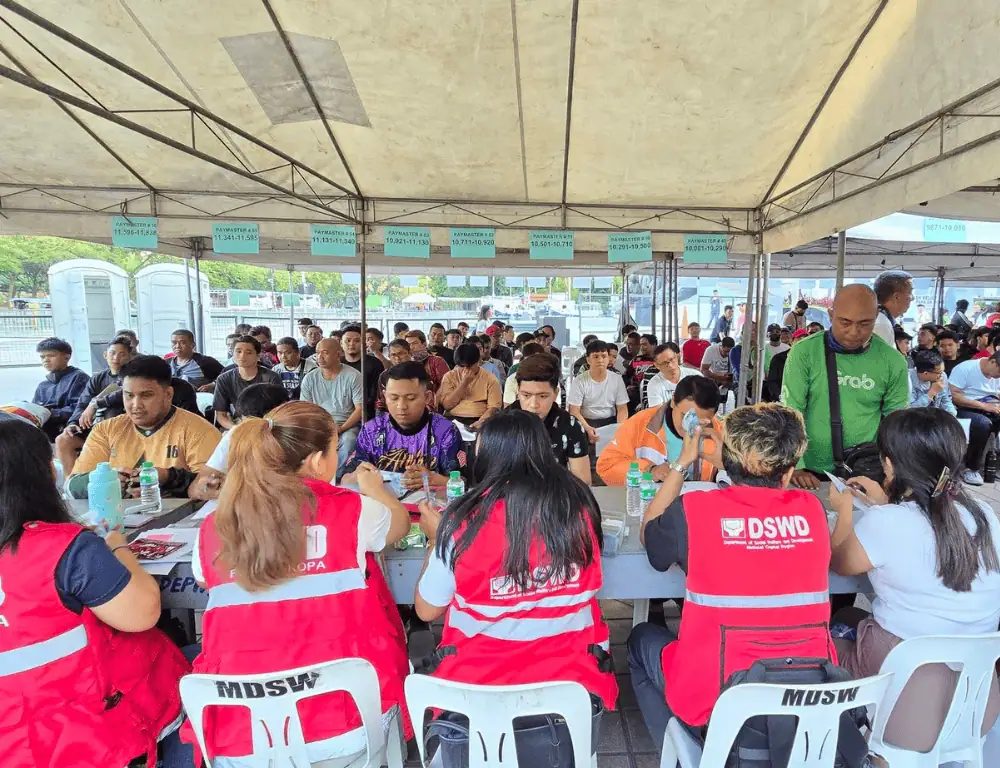
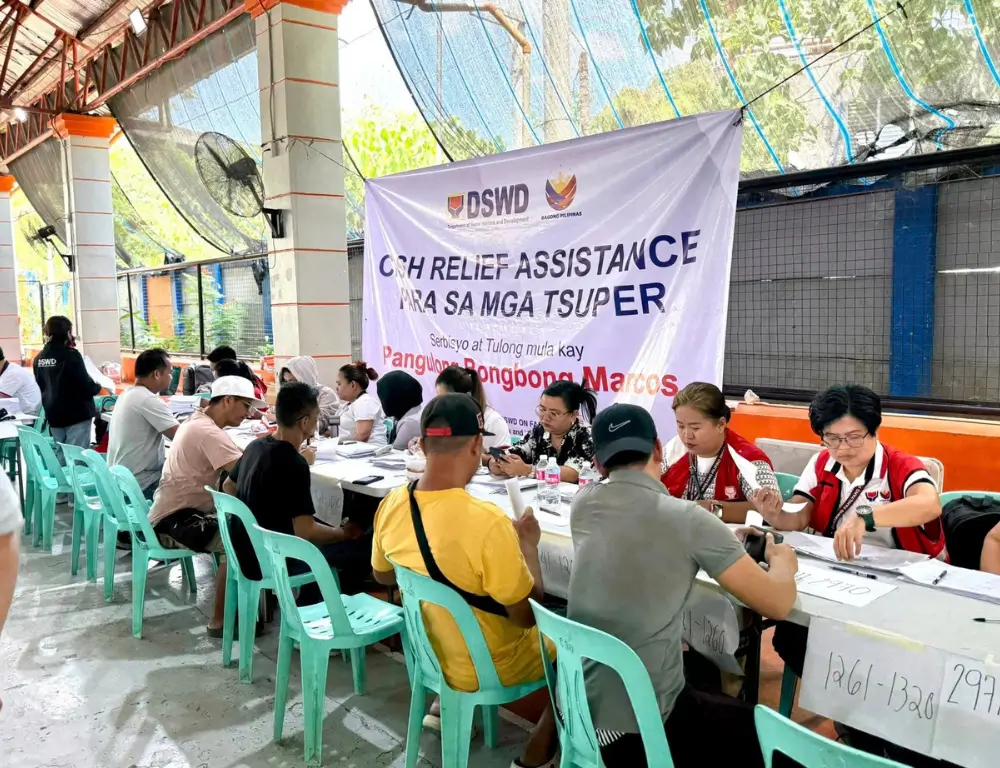
The President ordered full government mobilization and directed all relevant agencies to implement relief operations and ensure the timely distribution of food, emergency supplies, and financial assistance to affected communities.
President Marcos personally visited disaster-stricken areas, including Cebu, Catanduanes, Albay, Negros Occidental, and northern provinces of Luzon, assessing the situation on the ground, coordinating with local government units, and ensuring that aid reached the most vulnerable populations.
On November 6, the President declared a one-year state of national calamity to bolster disaster recovery and enhance future resilience.
To address long-term vulnerabilities, the President launched the nationwide Oplan Kontra Baha starting in Metro Manila and Cebu in November and Bacolod in December, a program aimed at mitigating chronic flooding through waterways clearing and cleaning operations under government-private sector coordination.
Health, education reforms
Under President Marcos, the government rigorously implemented the zero balance billing policy, ensuring that patients admitted to basic or ward accommodations in Department of Health (DOH)-listed hospitals had their medical expenses fully covered.
Just a few months since the President announced the policy during his fourth SONA, more than one million Filipinos have benefited from the policy designed to ease the financial burden on patients and improve healthcare access in the country.
A substantial boost in the benefit packages under the Philippine Health Insurance Corporation (PhilHealth) further alleviated the financial burden on beneficiaries.
Complementing these measures, the nationwide rollout of Yaman ng Kalusugan (YAKAP) health caravans provided accessible medical services to communities while the establishment of Bagong Urgent Care and Ambulatory Service (BUCAS) centers provided free outpatient care.
In education, President Marcos’ administration advanced comprehensive reforms aimed at enhancing learning opportunities and outcomes.
The signing of the Expanded Tertiary Education Equivalency and Accreditation Program (ETEEAP) Act enabled working professionals to earn college degrees through the recognition of prior learning and work experience.
The delivery of laptops, digital learning tools and satellite internet to public schools especially in underserved areas empowered learners and teachers alike.
Education reforms were prioritized through the fine-tuning of the K–12 curriculum, the signing of the Early Childhood Care and Development System Act, the addition of thousands of new teaching posts, and support for teachers’ welfare and professional growth.
At the same time, President Marcos ordered the strengthening and wider reach of the Unified Student Financial Assistance System for Tertiary Education (UniFAST) to provide financial support to more deserving college students.
President Marcos directed measures to support learners and their families, including transport discounts, which eased commuting costs.
Social protection, food security
President Marcos spearheaded job fairs and improved transportation systems and commuter experience through fare discounts for students, senior citizens, and families and provision of e-shuttle services for persons with disabilities (PWDs).
The President also swiftly addressed community concerns such as the Siquijor power shortage, Bulacan schools’ water supply, and the San Juanico Bridge rehabilitation.
President Marcos intensified efforts to promote inclusive economic growth by implementing programs that directly benefit workers, farmers, and small businesses. Key initiatives included the historic Social Security System (SSS) pension reforms, which provided retirees with increased and timely benefits, alongside executive orders that strengthened workers’ rights and ensured their freedom of association.
President Marcos’ administration also expanded the 4Ps conditional cash transfer program to reach more vulnerable families and scaled up the AKSYON Fund to provide critical support for overseas Filipino workers.
To address food security, the government distributed fertilizer and farm machinery, established fair floor prices for palay, adjusted rice import policies to stabilize supply and prices, and invested in agri-processing and fish ports infrastructure to modernize farming and increase farmer incomes.
The President also launched the Benteng Bigas Meron Na program to ensure access to affordable rice for vulnerable sectors and bolster food security.
The administration of President Marcos accelerated the country’s digital transformation, expanding the eGovPH Super App to provide more accessible government services.
President Marcos launched the eGovPH Serbisyo Hub in San Juan City to allow easier access and faster services from government agencies gathered under one center.
On President Marcos’ guidance, efforts were made to improve digital connectivity including faster SIM card distribution and the rollout of the Free Wi-Fi for All program, ensuring that government services, education, and communications reached even the most remote areas.
Also, cybersecurity measures were simultaneously strengthened to protect citizens’ data and maintain trust in digital government platforms.
On the instructions of President Marcos, the Department of Transportation deployed Dalian trains, which had been idle for nearly 10 years, to augment MRT-3 operations, significantly improving mass transit efficiency in Metro Manila. Airport upgrades at key tourism gateways enhanced both domestic and international travel, stimulating tourism and supporting local economic growth.
Additionally, President Marcos’ order for the 100 percent electrification of households brought more communities into the national grid.
The President and First Lady Louise Araneta-Marcos brought government services directly to overseas Filipino workers (OFWs) through the OFW Serbisyo Caravan conducted in 11 key cities for migrant Filipinos.
Designed as a one-stop service hub, the Serbisyo Caravan provided OFWs convenient access to multiple government services, such as welfare and legal aid, documentation, social security and national ID enrollment.
Security, peace and order
The President maintained full support for the Armed Forces of the Philippines, pushing forward modernization efforts and internal and external security measures.
In fighting crime, the President ordered heightened police patrols, faster response time for emergencies through the new Unified 911 System, and intensified operations against drug syndicates.
Just three years into President Marcos’ term, the amount of illegal drugs confiscated has already nearly matched the total haul seized over the entire six-year term of the previous administration.
At the same time, the number of fatalities under President Marcos’ administration remains a very small fraction of those recorded during the previous administration, highlighting a shift toward a more humane and reform-focused strategy.
For the welfare of military and uniformed personnel, the President approved an adjustment in base pay to be implemented in three tranches beginning on January 1, 2026, and raised the daily subsistence allowance to PhP350.
Meanwhile, leadership changes and key appointments ensured continuity and stability in governance.
Diplomacy, ASEAN Chairship
President Marcos pursued an active foreign policy throughout 2025, strengthening alliances and expanding regional and global partnerships.
State visits to Cambodia and India, participation in Association of Southeast Asian Nations (ASEAN) engagements, and high-level meetings during the Asia-Pacific Economic Cooperation (APEC) Summit further underscored the Philippines’ commitment to multilateralism, regional stability, and international trade and security partnerships.
In November, President Marcos formally launched the Philippines’ ASEAN 2026 Chairship with the theme “Navigating our Future, Together,” focusing on peace and security anchors, prosperity corridors, and people empowerment.
The year 2025 reflected President Marcos’ multifaceted approach to governance—anchored on accountability, resilience, and the delivery of tangible improvements in the everyday lives of Filipinos. | PND